
Present Perfect vs Past Simple (B1) — o regulă simplă+ exemple reale
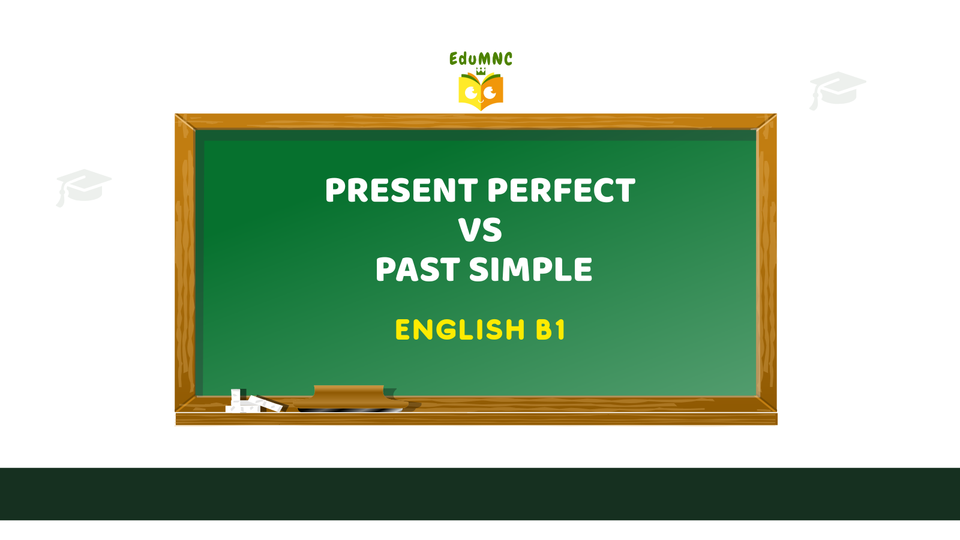
Present Perfect vs Past Simple (B1): alege mesajul pe care vrei să-l transmiți
De cele mai multe ori, nu e vorba de „corect vs greșit”, ci de ce vrei să scoți în evidență.
Ideea centrală (într-o propoziție)
- Past Simple = poveste / timeline (un fapt încheiat, plasat în trecut)
- Present Perfect = relevanță acum (rezultat, experiență, noutate)
Întrebarea rapidă (care te scoate din blocaj)
- Vrei să subliniezi „când?” / „în ce moment?” → Past Simple
- Vrei să subliniezi „ce contează acum?” / „care e efectul?” / „ce experiență?” → Present Perfect
Indicii (ajutoare, nu „reguli de interzis”)
✅ Past Simple — elemente-cheie
Îl alegi când vorbești despre trecut ca despre o poveste (îl pui pe axa timpului):
- un moment/perioadă încheiată (te interesează plasarea în trecut)
- indicii frecvente de timp: yesterday, last…, in 2019, two days ago, when…
- verbe tipice de narațiune: went, saw, met, called, finished
Examples:
- I met her last week.
- He called me when I was at work.
✅ Present Perfect — elemente-cheie
Îl alegi când trecutul este important pentru prezent:
- rezultat acum (efect vizibil/valabil acum)
- experiență de viață (nu contează când exact)
- noutate / update recent
- indicii frecvente: ever, never, already, just, yet, recently, so far
Examples:
- I’ve lost my keys. (result now)
- Have you ever been to Paris? (experience)
- She has just arrived. (recent news)
Aceeași situație, sens diferit (aici se vede „mesajul”)
- I lost my keys. → intru în poveste: „ce s-a întâmplat” (timeline)
- I’ve lost my keys. → contează rezultatul: „nu le am acum” (now-relevance)
💡
Test de 3 secunde: Spune propoziția în minte și întreabă-te: 1. Spun o poveste? → [TIMELINE] Past Simple 2. Anunț un rezultat / experiență / noutate? → [NOW] Present Perfect
Challenge practice (B1) — Present Perfect vs Past Simple
Choose the correct form and complete the verb.
- I ______ my keys again. I’ve looked everywhere, but I still can’t find them. (lose)
- I ______ my keys yesterday, but I found them under the sofa in the evening. (lose)
- She ______ me when I was in a meeting, so I didn’t reply immediately. (text)
- She ______ me three times this morning. I should probably call her back. (message)
- We ______ two lessons so far, and I already feel more confident. (have)
- We ______ two lessons last week, but we didn’t do any speaking practice. (have)
- I’m not hungry — I ______ just ______ lunch. (have)
- I ______ lunch at 1 pm and then went back to work. (have)
- ______ you ever ______ a job interview in English? (do)
- I ______ an interview in English when I applied for this job. (do)
- This week, my pronunciation ______ a lot, but I still make mistakes. (improve)
- My pronunciation ______ a lot when I lived abroad. (improve)
Challenge practice (B1) — Key + why
- have lost — [NOW] rezultat: încă nu le găsește.
- lost — [TIMELINE] „yesterday” = trecut închis.
- texted— [TIMELINE] „when I was…” = moment din poveste.
- has messaged — [NOW] situație relevantă acum (3 mesaje azi dimineață).
- have had — [NOW] „so far” = bilanț până acum.
- had — [TIMELINE] „last week” = perioadă încheiată.
- have just had — [NOW] „just” = noutate/rezultat recent (nu îi e foame acum).
- had — [TIMELINE] moment fix („at 1 pm”) + succesiune.
- Have / done — [NOW] „ever” = experiență (timpul nu contează).
- did — [TIMELINE] „when I applied…” = moment specific.
- has improved — [NOW] bilanț în perioada „this week”, accent pe rezultat.
- improved — [TIMELINE] perioadă încheiată („when I lived abroad”).
Comments ()